
Battery Storage
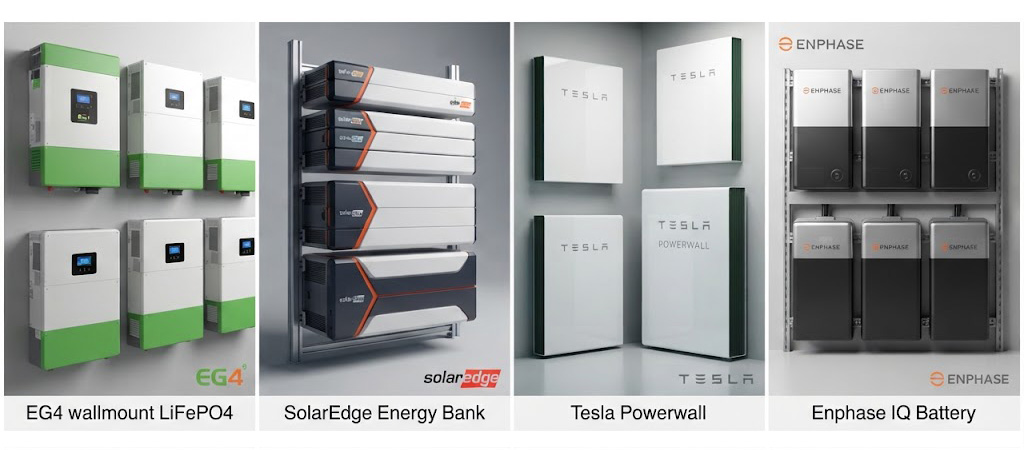
Table of Contents
Understanding Battery Energy Storage Systems (BESS)
A reliable Battery Storage System serves as the heart of any resilient off-grid or hybrid home energy setup. By storing surplus solar generation during peak daylight hours, a well-engineered battery storage array ensures continuous power availability through grid outages, peak demand periods, and nighttime loads. Discuss them in the forum!
Core Battery Form Factors & Chemistries
- Lithium Iron Phosphate (LiFePO4) Chemistry: Widely recognized as the gold standard for residential stationary storage due to its exceptional thermal stability, long cycle life, and inherent safety profile compared to traditional lithium-ion chemistries.
- Wall-Mount Configurations: Streamlined, space-saving units designed for clean indoor or garage installations. These systems mount directly to structural studs, often featuring integrated busbars, display screens, and modular capacity expansion.
- Rack-Mount & Stackable Systems: Industrial-style enclosure setups where individual 48V or stacked 12.8V battery modules slide into heavy-duty server rack cabinets. This modular approach allows for seamless expansion and simplified maintenance.
- 12.8V Battery Banks (Series & Parallel Configuration): Smaller-format 12.8V LiFePO4 batteries grouped into series-parallel gangs to achieve higher system voltages (such as 24V or 48V banks). Proper balancing, terminal busbar sizing, and overcurrent protection are critical when ganging multiple 12.8V units to feed high-capacity hybrid inverters.
Major Battery Storage Industry Solutions
- EG4 WallMount & Rack-Mount Series: Highly scalable and cost-effective LiFePO4 storage options designed for seamless integration with prominent hybrid inverters, featuring robust built-in BMS (Battery Management Systems) and clear visual diagnostics.
- SolarEdge Energy Bank: AC- and DC-coupled high-voltage storage solutions engineered to maximize self-consumption, featuring tightly integrated monitoring within the SolarEdge ecosystem.
- Tesla Powerwall: Sleek, all-in-one wall-mounted lithium-ion battery systems equipped with built-in inverters, designed for seamless backup protection and automated energy shifting.
- Enphase IQ Battery: Modular, AC-coupled microinverter-based storage systems that offer granular scalability and high reliability down to the individual storage block level.
- FranklinWH (FranklinWH aPower 2): Known for high peak power output and robust whole-home backup capabilities, utilizing LFP chemistry and smart circuits to manage heavy loads like well pumps and air conditioners.
- BYD (Battery-Box Series): A global battery manufacturing giant that provides high-voltage and low-voltage modular stackable LFP storage solutions widely compatible with various hybrid inverters.
- Generac (PWRcell): A prominent name in backup power that offers modular cabinet-style battery storage built for scalable capacity expansion.
- Panasonic (EverVolt): Offers versatile AC- and DC-coupled storage options backed by strong brand reliability and a solid warranty framework.
- Sonnen: A premium German manufacturer (owned by Shell) specializing in smart, high-cycle-life LFP systems with advanced software for virtual power plant (VPP) participation and grid services.
- Schneider Electric: Known heavily in the off-grid and hybrid integration space (pairing closely with equipment like the Conext XW Pro inverter lines) for robust electrical balancing and industrial-grade reliability.
- Anker (SOLIX X1): A newer entrant gaining rapid traction in the modular home backup market with stackable, high-voltage LFP design configurations.
Battery Storage Safety Standards & Code Compliance
- UL 9540 Certification: The definitive safety standard for Energy Storage Systems and Equipment. Compliance ensures that the entire integrated storage system—including batteries, inverters, and management hardware—meets stringent fire safety, structural integrity, and electrical testing benchmarks required by local authorities having jurisdiction (AHJs) and the National Electrical Code (NEC).
Other Storage Systems
While brands like EG4, SolarEdge, Tesla, and Enphase dominate a large portion of the residential market, several alternative manufacturers offer robust options tailored to specific off-grid and backup requirements.
- FranklinWH (aPower 2): Known for exceptionally high peak power output and intelligent circuit management, making it ideal for whole-home backup involving heavy surges from well pumps and air conditioners.
- Pros: Excellent surge capability and smart load control.
- Cons: Generally higher system footprint and premium pricing compared to modular entry-level alternatives.
- BYD (Battery-Box Series): A global battery manufacturer providing flexible, stackable high-voltage and low-voltage Lithium Iron Phosphate (LiFePO4) storage solutions with wide inverter compatibility.
- Pros: Highly modular architecture and strong global manufacturing pedigree.
- Cons: Availability can fluctuate regionally, and configuration requires careful matching with compatible hybrid inverters.
- Generac (PWRcell): A recognizable name in backup power offering cabinet-style modular configurations built for straightforward capacity scaling.
- Pros: Scalable cabinet design that accommodates expanding storage needs over time.
- Cons: Can have a larger physical cabinet footprint compared to sleek, wall-mounted alternatives.
- Panasonic (EverVolt): Delivers versatile AC- and DC-coupled storage options backed by a strong warranty and established brand trust.
- Pros: Flexible coupling choices and reliable brand backing.
- Cons: Ecosystem options can be less customizable for advanced DIY or off-grid tweaking.
- Sonnen: Premium German-engineered smart LFP systems optimized for high cycle life, advanced software integration, and virtual power plant (VPP) participation.
- Pros: Sophisticated energy management software and elite longevity.
- Cons: Premium, high-end price point that may stretch tighter project budgets.
- Schneider Electric: A cornerstone in industrial-grade off-grid and hybrid integration, known for robust electrical balancing when paired with equipment like the Conext XW Pro inverter line.
- Pros: Rugged, heavy-duty reliability built for demanding off-grid architectures.
- Cons: Setup is more complex and geared toward professional installers or advanced system designers.
- Anker (SOLIX X1): A newer modular entrant utilizing stackable, high-voltage LFP configurations to gain traction in the home backup market.
- Pros: Sleek, modern aesthetic and rapid installation design.
- Cons: Shorter multi-year track record in stationary residential applications compared to legacy energy brands.
Other Storage Types: Hydrogen Energy Storage
Beyond traditional electrochemical battery systems (LiFePO4, lead-acid, or nickel-iron), hydrogen energy storage offers an alternative long-term, seasonal storage medium—particularly for deep off-grid setups where winter solar deficits require massive energy reserves.
- How It Works: Surplus solar or wind electricity powers an electrolyzer to split water into hydrogen and oxygen. The hydrogen gas is compressed and stored in high-pressure tanks. When electricity is needed, the hydrogen is fed back through a fuel cell (or a modified combustion generator) to produce electricity and water.
- Pros:
- Infinite Seasonal Storage: Unlike chemical batteries that self-discharge over time and degrade with deep cycling, compressed hydrogen tanks can store massive amounts of energy for months with zero degradation.
- Scalability: Expanding storage capacity is as simple as adding more low-footprint pressure tanks rather than purchasing entirely new battery racks.
- Pros:
- Cons:
- Low Round-Trip Efficiency: The conversion process (electricity to hydrogen to electricity) typically yields an overall system efficiency of only 30% to 40%, compared to 85% to 90% for lithium-ion battery banks.
- High Upstream Costs & Complexity: Electrolyzers, high-pressure storage vessels, fuel cells, and safety monitoring equipment involve high initial capital expenditures and strict regulatory/maintenance requirements.